The right choice of flooring during construction is the key to the success, reliability and economic benefits of the project. Therefore, already at the planning and design stage of the future building, it is necessary to clearly calculate the load that the floor must withstand, as well as take into account other factors related to the requirements for the future functioning of the building. After all, the ceiling not only ensures the stability of the building as a whole, but is also an important element of thermal and sound insulation.
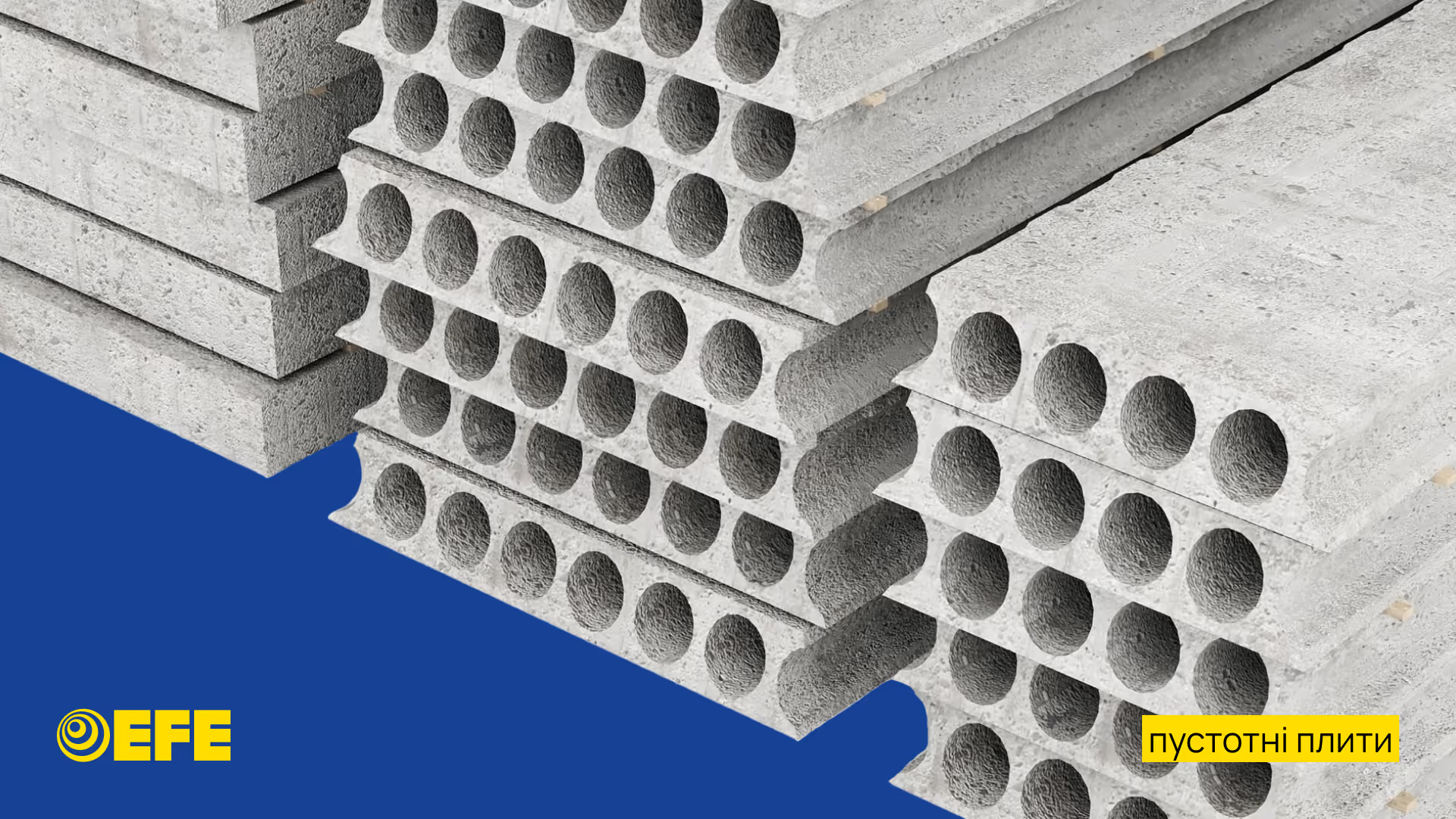
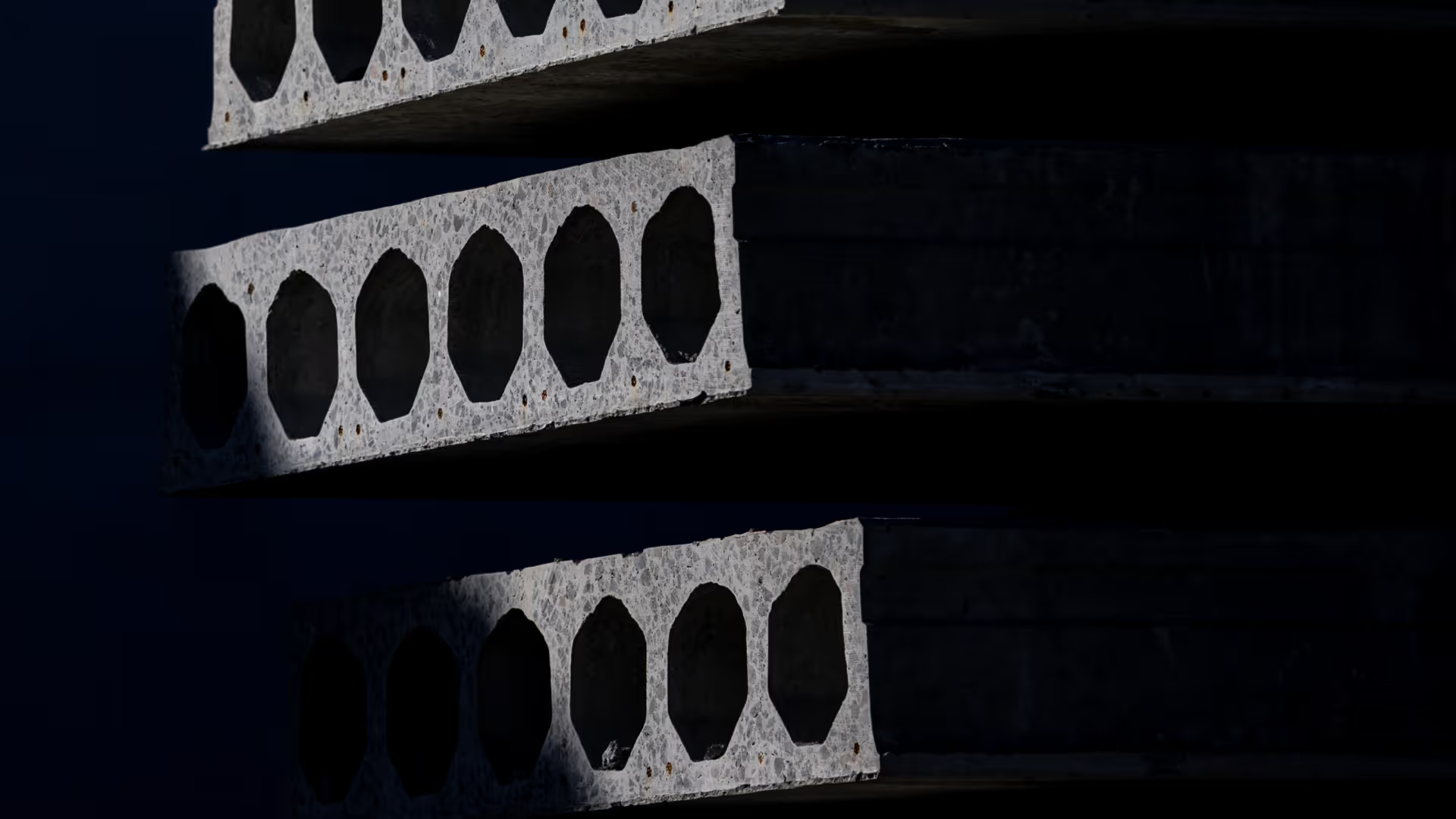
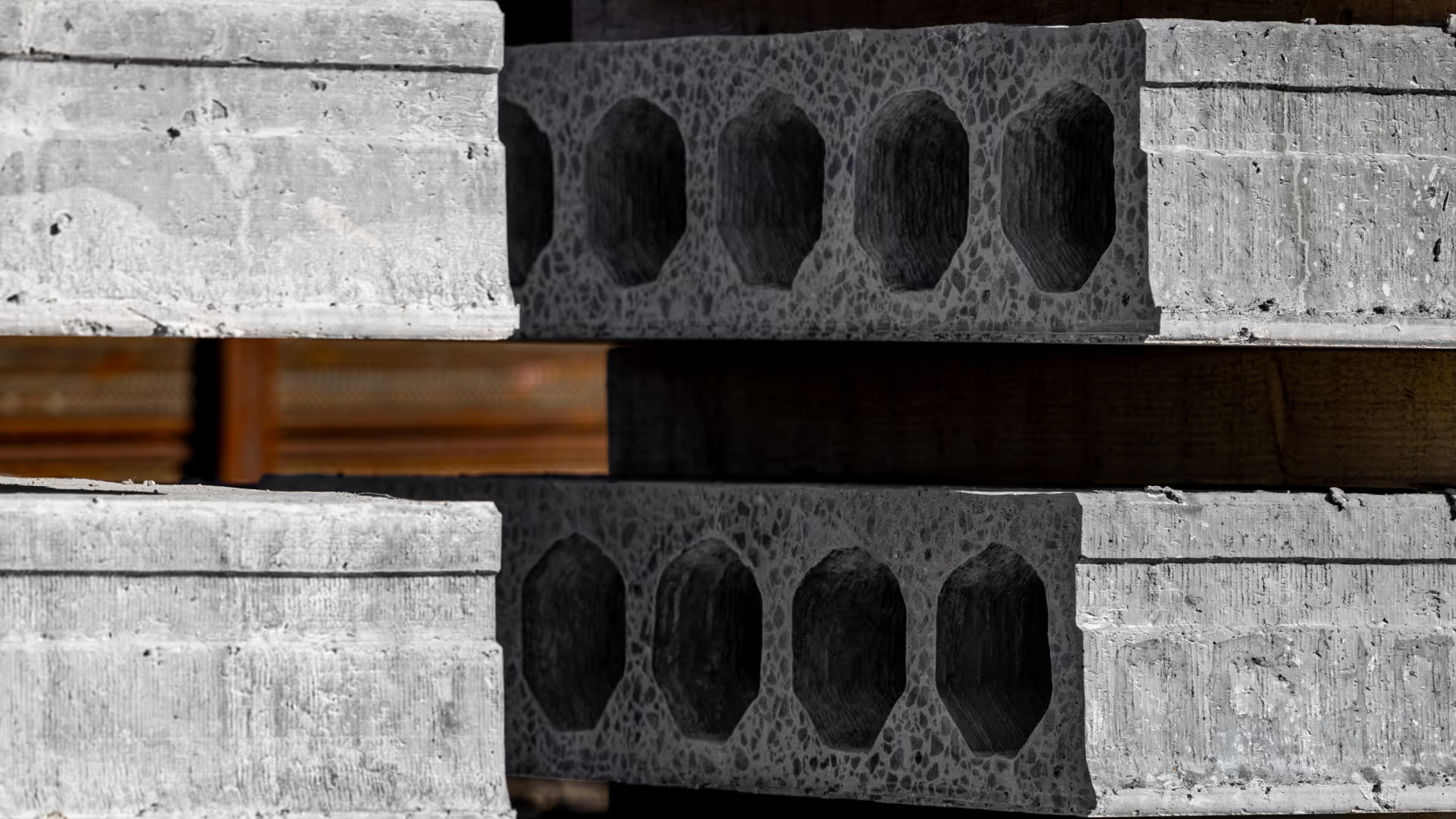
Hollow core slabs are reinforced concrete structures designed to build load-bearing floors between floors in both industrial and residential buildings. Their feature is the presence of parallel cavities of round, oval or square shape.
A special system of beam crossing and concrete-filled reinforcement ensures high quality, reliability and load resistance.
On the one hand, concrete slabs with voids inside are much lighter, because they require significantly less concrete mix. On the other hand, they have improved thermal conductivity and good sound insulation.
Reinforced concrete floor slabs with voids inside have a number of advantages, including, in particular:
The floor slabs are made of high-quality concrete with a strength index of at least B22.5. The density of concrete should be between 2000 and 2400 kg/m3. At the same time, the frost resistance of concrete is F200, and their moisture resistance is W4.
Such floor slabs are usually used for the construction of one-story buildings: industrial premises, garages, warehouses, etc. They are durable and can withstand significant loads, but are not used for multi-story construction.
Ribbed floor slabs, the dimensions of which can vary depending on the manufacturer's offerings, have a characteristic "ribbed" shape. This is what gives them their name.
The sizes and shapes of floor slabs can be very diverse and depend on both the offer of manufacturers and the type of flooring chosen.
In general, the main types of flooring are:
A wooden floor is quite unreliable, as it has low fire resistance and can bend under load. It is usually used in the construction of wooden houses.
Metal flooring is also not very popular because it has unsatisfactory noise insulation properties. In addition, the economic benefits of installing such a floor are questionable.
So let's take a look at the most popular methods of arranging the flooring.
The floor slabs, which can be manufactured in sizes and shapes according to the customer's needs, are a monolithic type of flooring. This type of flooring can be used to cover rooms of any non-standard shape.
The name itself indicates the main characteristic of such a floor - it is a solid monolithic concrete slab that can take any shape. A clear advantage of such a floor is the relative ease of its arrangement, as it does not require heavy equipment for lifting and laying.
However, the installation of a monolithic concrete floor requires good skills and high-quality concrete mix for pouring.
A monolithic floor slab involves several stages of production: formwork installation, reinforcement cage laying, and concrete concreting.
This is a professional solution for large-scale professional construction. For its construction, reinforced concrete floor slabs are used, which are mounted with the help of special equipment.
Such a floor is durable and reliable. It allows for the construction of brick partitions inside the building, regardless of their location on the ground floor.
At the same time, a precast concrete floor saves time and construction budget. After all, with the help of special equipment, it can be arranged in a few hours.
If you compare different types of floor slabs professionally, you will definitely come to the conclusion that hollow core slabs have a number of advantages.
After all, we are talking about safety indicators, such as an overall reduction in the load on the bearing walls of buildings, load bearing capacity, enhanced fire safety, frost resistance, water resistance, resistance to deformation, etc.
At the same time, hollow core slabs have clear advantages over other flooring methods, such as speed and ease of installation, as well as budget savings.
Speaking about the efficiency of construction using hollow core slabs, we are talking about saving time, budget, labor and logistics costs.
The only exceptions are non-standard shapes and sizes or buildings that are being constructed in areas that are difficult to access for professional equipment. In this case, it is necessary to select individual solutions for the floor.
Professional developers and construction contractors are increasingly choosing hollow core slabs. After all, they care not only about convenience and economic feasibility, but also about the safety of construction.
Modern technologies and the latest engineering developments have made it possible to create floor slabs of maximum strength and reliability with minimal weight. Hollow core slabs are an excellent solution for the construction of multi-storey residential buildings, as well as for commercial buildings, industrial facilities or private construction.
EFE's multi-cavity slab is a smart, cost-effective and efficient solution. After all, the manufacturer has a powerful production facility and is able to provide both the production of the required volumes of reinforced concrete structures and the promptness of order fulfillment and well-thought-out logistics. It is important that the company's products have quality certificates in accordance with the DSTU for floor slabs.
That's why iconic buildings and prestigious residential complexes in Lviv and Ukraine are built using EFE products. After all, EFE is a reliable construction partner for the production of ready-mixed concrete, reinforced concrete products, steel structures and paving stones.
