%20(2).png)
The industry publication ProfBuild gathered insights from market players on the current situation in the concrete and precast concrete sector. Participants shared their assessments of market conditions, key trends for 2025, changes in the construction landscape, and expectations regarding future recovery.
Among the experts who joined the discussion was EFE. Serhiy Duritsky, the company’s technical director, shared his vision for the industry’s development. In a comment for ProfBuild, he discussed the current situation in the ready-mix concrete and precast reinforced concrete markets, changes in demand patterns, investments in production, and factors influencing the industry’s development today. We have compiled key insights on various aspects of the industry.
According to Sergey Duritsky, Technical Director of EFE, in 2025 the ready-mix concrete market, particularly in western Ukraine, showed moderate but steady growth in production volumes. The highest consumption of ready-mix concrete in 2025 was recorded in the following key western regions: Lviv, Zakarpattia, Volyn, Ivano-Frankivsk, Ternopil, and Chernivtsi. By the end of the year, activity in the Zhytomyr region also picked up significantly. Despite the impact of full-scale war, demand for construction materials remains stable, allowing manufacturers to keep their operations running.
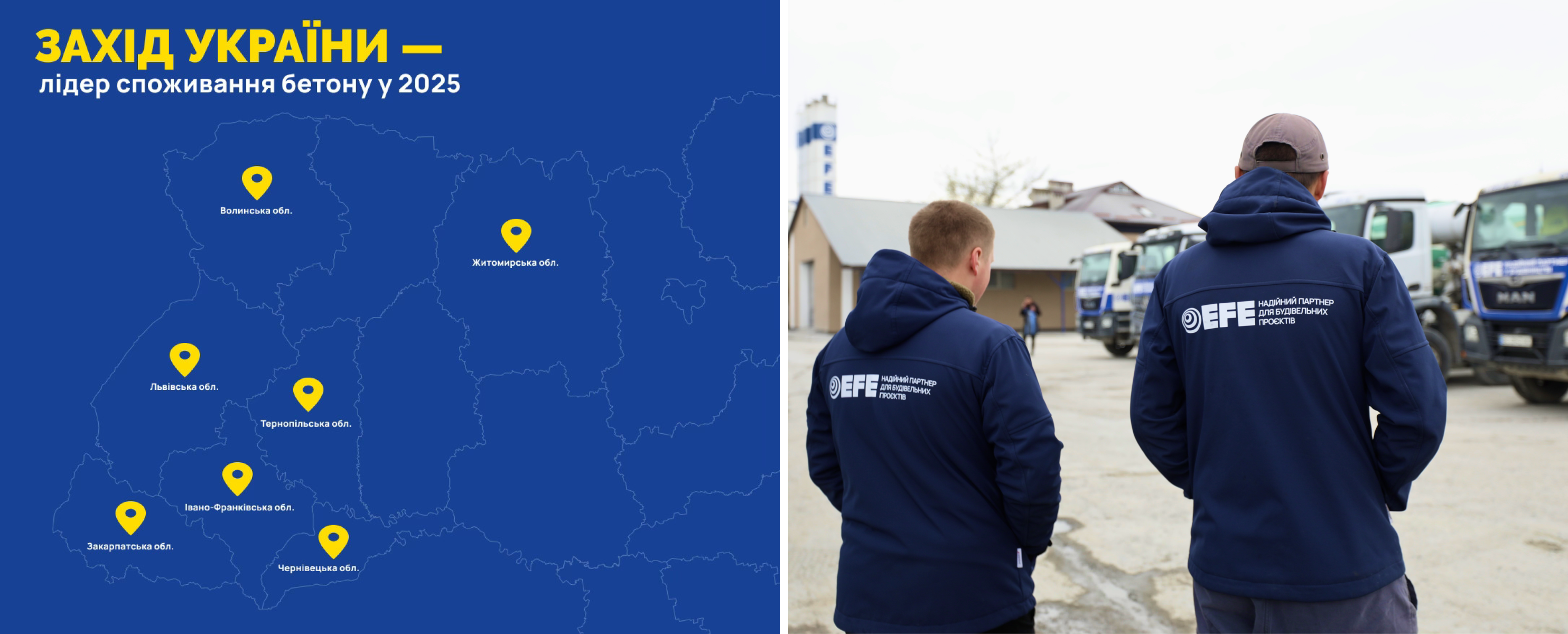
Alongside ready-mix concrete, the precast reinforced concrete segment is also showing positive growth. In particular, EFE has produced a record volume of reinforced concrete products. Interest is also growing in customized reinforced concrete solutions, which enable infrastructure and industrial projects to be completed more quickly.
According to 2025 results, the main demand for ready-mix concrete is driven by the following segments: residential, infrastructure, and industrial. At the same time, infrastructure construction leads the demand for reinforced concrete by a wide margin, followed by industrial facilities, with residential construction in third place. The impact of the war has shifted the focus toward infrastructure projects, so the residential segment remains at a relatively low level within the reinforced concrete sector.
Key challenges for the industry remain rising production costs, logistical factors, the war’s impact on the structure of construction demand, and a shortage of skilled personnel.
In 2025, production costs for both ready-mix concrete and reinforced concrete continue to rise. The main factors driving this trend remain rising prices for raw materials—sand, cement, and crushed stone—as well as rebar and fuel and lubricants, along with logistics costs. War conditions are making the market more volatile, so manufacturers have to regularly adjust their selling prices in line with changes in the cost of key components.
.png)
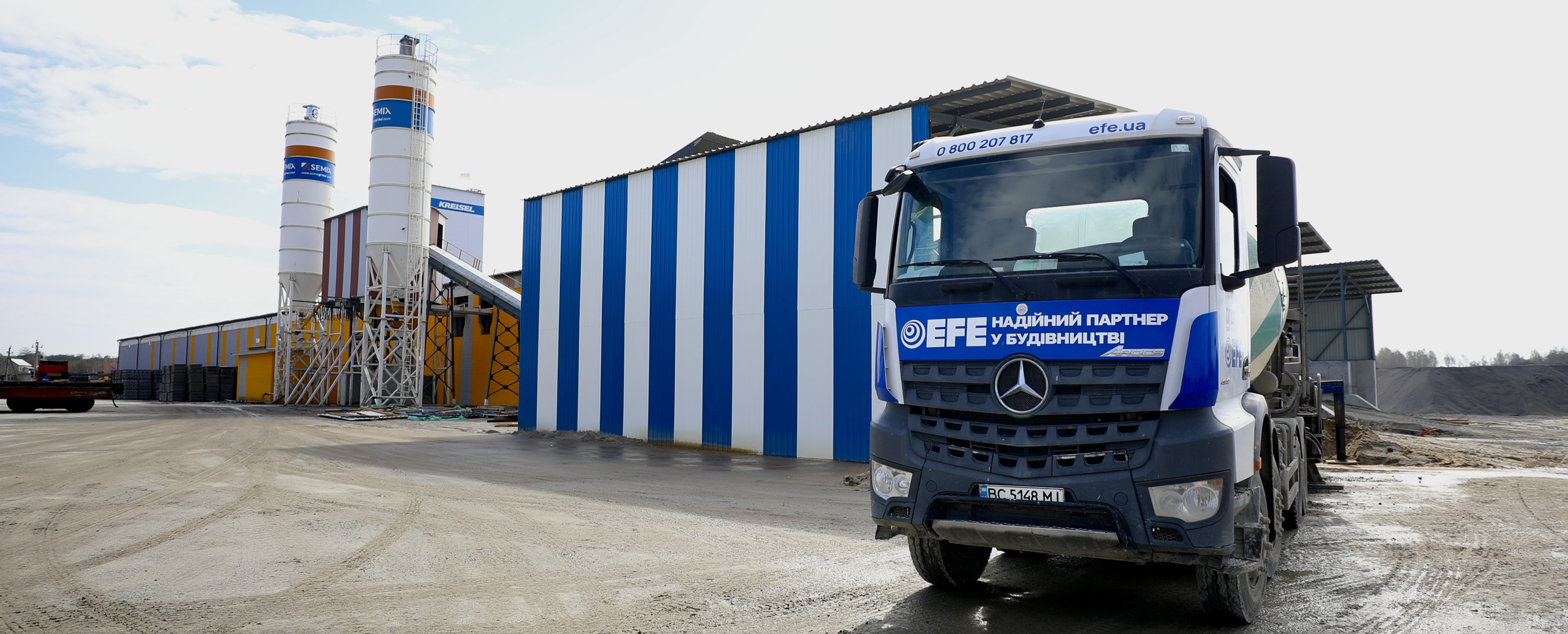
EFE is constantly modernizing its production facilities. Today, in the Lviv region alone, the company operates six concrete mixing plants, and its fleet of specialized equipment includes 62 concrete mixers and 8 concrete pumps. In addition, EFE has the capability to deploy mobile plants, allowing it to quickly adapt production to the geography and needs of projects.
Last year, the company continued to invest in production development— from upgrading equipment and automating production lines to launching new business lines.

In 2025, we invested in production equipment for manufacturing reinforced concrete products for utility networks, and by the end of the year we launched the production of custom-made reinforced concrete products, including large-scale columns, beams, and culverts for the construction of long-span structures. “This year, we plan to expand this business area and increase the range and volume of prefabricated reinforced concrete products,” notes Serhiy Duritsky.
The company’s plans for 2026 also include a gradual expansion of capacity in the Zhytomyr region and the Carpathian region, where demand for ready-mix concrete is growing. Renewable energy facilities and infrastructure projects critical to the country remain a key focus, as they require stable supply volumes and high operational flexibility.
EFE is improving energy efficiency and enhancing the sustainability of its production. Solar power plants have been installed at two of the company’s six production facilities, covering approximately 35% of its energy needs. The facilities have also implemented an open-loop recycling system to reuse water and inert materials after equipment rinsing. Given the situation in the energy sector, the company additionally uses backup power sources (diesel generator sets), and where technologically feasible in production processes, it utilizes natural gas.
According to Serhiy Duritsky, the market’s future development will depend on the overall economic and security situation in the country. If the active phase of the war continues, the market will likely remain at its current level or show moderate growth. Conversely, the end of hostilities could trigger significantly more active growth thanks to the launch of large-scale programs to rebuild residential, industrial, and infrastructure facilities.
Once large-scale reconstruction begins, the market will be shaped by projects requiring fast, technologically advanced, and scalable solutions. The focus will be on prefabricated and more affordable housing, industrial facilities, and the active development of infrastructure projects. A major driver will be the restoration of roads, destroyed bridges, and similar infrastructure.
At the same time, for the sector’s full-scale development, key factors today remain business solvency, attracting foreign investment into construction projects, as well as the role of state support and access to long-term business financing on affordable terms.
The production of concrete and precast concrete is capital-intensive, and the payback period for investments in production capacity can be as long as 6–8 years. That is why, without lending programs offering low interest rates and long financing terms, scaling up production—especially in the precast reinforced concrete segment—remains difficult for most companies, says Serhiy Duritsky.
For more details on current trends and prospects, read the full ProfBuild article at the link.
